Why Volumetric Concrete Mixers Are Essential for Emergency Construction
Volumetric concrete mixers deliver on-demand, on-site concrete for disaster recovery, road repairs, and emergency infrastructure work — no batch plant required.
When disaster strikes or critical infrastructure fails, every hour without concrete is an hour of added risk. Traditional ready-mix delivery — with its batch plant scheduling, short-load fees, and drive-time limits — simply isn’t built for emergencies. That’s where volumetric concrete mixers come in: mobile, truck-mounted units that mix fresh concrete on demand, right at the point of need.
For emergency responders, DOTs, utility crews, and disaster recovery teams, volumetric mixing technology isn’t a nice-to-have. It’s often the difference between a same-day fix and a multi-day shutdown.
How Volumetric Mixers Solve Emergency Concrete Challenges
1. On-Demand Concrete Production, No Batch Plant Required
Emergency work can’t wait on a batch plant’s schedule — especially when that plant is damaged, overwhelmed, or hours away. Volumetric mixers carry raw materials (cement, aggregate, water, admixtures) separately and mix them on-site in exact quantities, so crews get fresh concrete the moment they need it. That means faster response on road repairs, bridge reinforcement, and disaster recovery work, without waiting in line for a delivery slot.
2. Custom Mix Designs, Adjusted in Real Time
No two emergencies call for the same concrete mix. Volumetric mixers give operators full control over the water-cement ratio, aggregate blend, and additives, so the mix can be dialed in for the job — high-strength concrete for structural repairs, rapid-set mixes for fast-track applications, or specialty blends for unusual site conditions. Traditional ready-mix trucks can’t offer that kind of flexibility once concrete leaves the plant.
3. Less Waste, Lower Cost
Estimating concrete volume under emergency conditions is guesswork at best. Order too much from a ready-mix supplier and you’re paying for waste; order too little and you’re waiting on another truck. Volumetric mixers produce exactly the volume needed and nothing more — a meaningful cost advantage for government agencies, municipalities, and disaster response teams working against tight budgets and tighter timelines.
4. Mobility to Reach Difficult Sites
Emergency projects rarely happen in convenient locations. Volumetric mixers are built to go where the work is — disaster zones, remote sites, congested urban streets — and keep producing concrete without returning to a plant for more material. A traditional drum mixer that runs out has to make the trip back; a volumetric mixer just keeps batching.
5. Fresh, Workable Concrete — No Setting Clock Ticking During Transport
Concrete in a traditional drum mixer starts its cure clock the moment it’s batched, which limits placement time and risks rejected loads if a delivery runs long. Volumetric mixers batch on demand, so every load is fresh at the point of placement — better workability, fewer rejected loads, and better-quality results under pressure.
Where Volumetric Mixers Get Used in Emergency Construction
- Disaster recovery and infrastructure repair — Hurricanes, earthquakes, and floods damage roads, bridges, dams, and buildings that need rapid rebuilding. On-site concrete production speeds up recovery timelines significantly.
- Emergency utility repairs — Broken water mains, damaged sewer lines, and compromised electrical infrastructure need trench backfill and structural repair concrete fast, without waiting on outside delivery.
- Military and defense operations — Runway repairs, bunker construction, and road building in remote or contested areas benefit from concrete production that doesn’t depend on fixed batch plants or vulnerable supply chains.
- Rapid road and highway repairs — High-traffic repair zones need fast-curing concrete to reopen roadways quickly and safely.
- Emergency and temporary shelter construction — Foundations, walls, and support structures for displaced-persons housing can move faster with on-site concrete supply.
Volumetric Mixers vs. Traditional Ready-Mix: The Emergency Advantage
| Ready-Mix Delivery | Volumetric Mixer | |
|---|---|---|
| Batch plant dependency | Required | None |
| Short-load fees | Common on small orders | Eliminated |
| Workflow | Truck-by-truck, plant returns needed | Continuous on-site mixing |
| Mix adjustments | Locked in at the plant | Real-time, on-site |
| Material freshness | Setting clock starts at batching | Fresh at point of placement |
Why ProAll Volumetric Mixers for Emergency Work
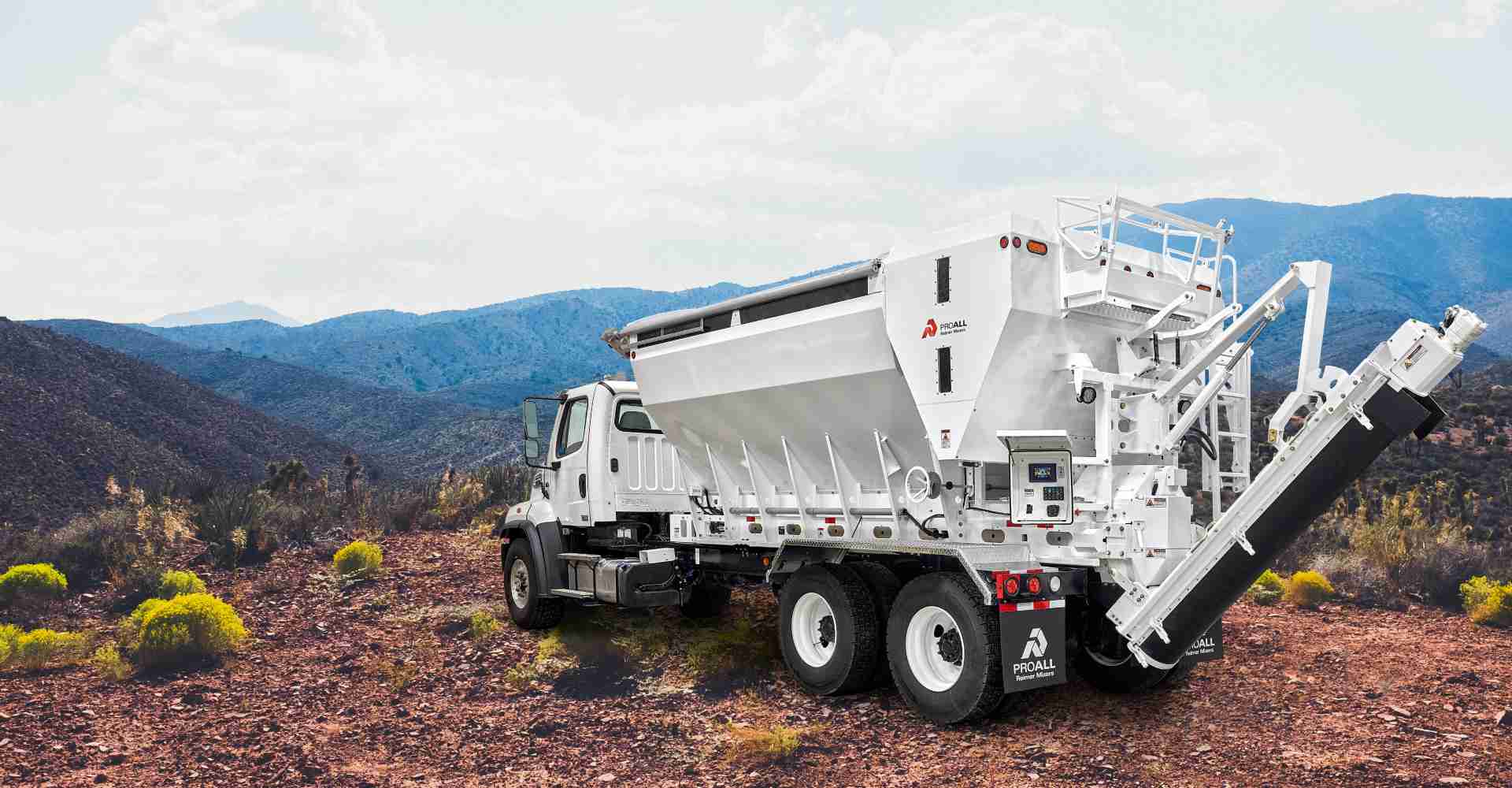
ProAll volumetric mixers are engineered for the pace and unpredictability of emergency construction. A few things that matter most when the job can’t wait:
- On-demand mixing — fresh concrete produced instantly, cutting downtime between pours
- Commander control system — intuitive digital controls for precise, repeatable mix adjustments in the field
- Rugged, field-ready build quality — designed to hold up in extreme conditions and high-demand environments
- Versatility — one machine that adapts across infrastructure repair, disaster recovery, and defense applications
When infrastructure fails or disaster strikes, the ability to produce reliable concrete on demand — anywhere, in any mix design — is what keeps recovery moving. Volumetric mixers deliver that flexibility, cutting waste, eliminating batch-plant dependency, and keeping crews working without interruption.
Ready to see how a ProAll volumetric mixer fits your emergency response fleet?