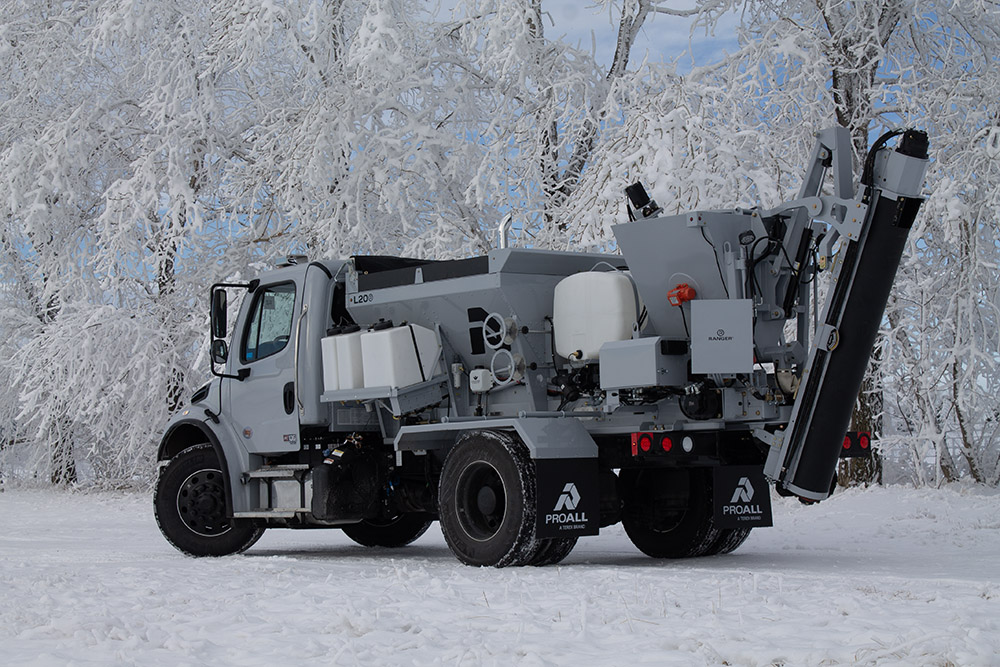
Built for the Cold: Winter Tips for Volumetric Mixers
When temperatures drop, concrete gets harder to work with. Cold slows setting and strength gain, which leaves fresh concrete exposed to freeze damage for longer. Weather also makes schedules harder to predict.
Volumetric mixers handle these conditions better than most equipment. With some preparation, your ProAll can keep working well into winter, or sit through it safely until spring.
Why Volumetric Works in Cold Weather
- Fresh concrete, mixed at the pour. You make concrete on site, so there’s no drum load losing heat on the road and no time running out on a batch before you can place it.
- Mix only what you need. If the weather turns mid-pour, you stop. No leftover load gets wasted.
- Adjust on the fly. You can fine-tune water, admixture dosage, and mix design right at the job site as conditions change.
Proven in the Arctic
ProAll mixers have done this in some of the harshest conditions in North America. In Coral Harbour, a remote community on Southampton Island in Nunavut, a ProAll P95 produced concrete on site to build a new school and college. Shipping premixed concrete to a place like that isn’t realistic. Mixing on site kept the project moving despite extreme cold and long supply lines.
Winterize Your Mixer
Whether you’re pouring all winter or parking until spring:
- Drain the water system. Water left in the tank, pump, flow meter, or lines can freeze and crack components. Drain everything and blow out the lines with compressed air, using the drain points in your operator’s manual.
- Protect admixtures. Drain or protect the admix tanks and lines, and store admixtures above freezing.
- Keep cement dry. Condensation causes clumping and inaccurate mixes, so keep the bin covered.
- Watch your aggregate. Frozen chunks throw off proportions and strain the conveyor. Cover stockpiles and break up frozen material before loading.
- Inspect wear parts. Cold makes rubber brittle. Check belts, hoses, seals, the conveyor, and the auger, and replace anything worn now.
- Cover chassis basics. Check coolant, batteries, block heaters, and tires.
Best Practices for Cold-Weather Pours
- Use heated water to raise the mix temperature.
- Consider accelerating admixtures, using non-chloride products for reinforced work.
- Never place concrete on frozen ground, snow, or ice.
- Protect fresh concrete with insulated blankets or enclosures until it reaches early strength (around 500 psi).
- Monitor the temperature of the mix, the air, and the curing concrete.
- Schedule pours for the warmest part of the day, and plan around shorter daylight hours.
Prepare your crew as well: review cold-weather safety and slip hazards, and have a snow and ice plan in place before the first storm.
Get Ready Now
Need belts, seals, filters, or other wear parts before winter? Our Louisville parts center is ready to ship. Contact our parts team at 833-577-6255 or reach out to your ProAll regional sales manager.