5 BIG REASONS YOU SHOULD BE USING GUNITE NOW
Demand for concrete pool construction has surged over the past year, and among all the available methods, gunite stands out as the gold standard. Gunite pools are remarkably durable and can be shaped into just about any design imaginable, but that’s only part of the story behind their rising popularity. In this post, we’ll break down five reasons the experts keep coming back to gunite for their pool projects.
WHAT IS GUNITE?
If the term is new to you, gunite is the dry-spray method of applying concrete from a mobile concrete mixer to form a single cast shell. Aggregate and cement are mechanically combined and fed into a “gun” in a dry state. A compressor then drives the mixture through to the nozzle, where it meets water and is sprayed onto the surface at high speed.
A few other methods exist for the same purpose, namely shotcrete and poured concrete. Shotcrete is the “wet spray” approach, blending a high-cement-content mix with small-batch ready mix concrete that a volumetric concrete mixer sprays at high velocity onto shuttering and reinforcement. Poured concrete, or the “shutter and pour” technique, involves pouring concrete into traditional wooden frameworks, with walls built from concrete blocks in masonry block pools.
5 REASONS EXPERTS FAVOUR GUNITE OVER THE REST
Gunite has earned its reputation as a go-to technique for building top-quality swimming pools, thanks to a handful of clear advantages:
1. SHAPE IT HOWEVER YOU WANT
This process is ideal for intricate designs because it offers so much flexibility. Designers can dream up and build a pool in virtually any shape, opening the door to far more creativity.
That freedom matters, since a pool needs to work in harmony with the rest of the property and its surroundings. Gunite makes it possible to create a space that genuinely reflects the owner’s style.
2. LEANER CREW AND SPACE REQUIREMENTS
Gunite gets the job done with only a small team:
A Nozzleman who handles concrete placement and regulates hydration A Gunman who controls the gun’s air supply and the volume of mixture A Mixer Operator who keeps the cement-to-sand ratio and quality dialed in
It’s also a strong choice for tricky access locations. Operators typically work with a 50mm-diameter hose, and because that hose can run up to 80m from the volumetric mixer truck, the on-site footprint stays small.
3. COST-EFFECTIVE
If you’re building a larger reinforced-concrete pool, gunite tends to be the more economical route. It takes less time than the typical shutter-and-pour method and trims the cost of forming the pool shell.
That savings lets clients put more of the budget toward the finish, where they can get creative with stone, tile, lighting and furniture without as many constraints.
4. NO JOINTS, NO DEFECTS
A gunite shell comes out smooth and joint-free by nature of how it’s applied. Spraying builds the material up in layers through a mobile concrete mixer truck, producing a strong shell with no joints and, in turn, far less risk of cracking.
While pools can also be built from plastic, metal or fibreglass, gunite delivers an incredibly dense shell that’s tougher than standard concrete, and that strong foundation translates directly into a more durable pool.
5. FEWER DEPTH LIMITATIONS
The construction method you choose often dictates how deep a pool can go. Pools built with solid walls of hollow blocks filled with concrete mix are a good example.
Those pools are limited in vertical wall depth because they already have to stand up to two major forces: the weight of several tons of water and the pressure of the surrounding soil.
Gunite pools face no such worry. The sheer strength of the process removes depth concerns and lifts the usual limits on steel and concrete design.
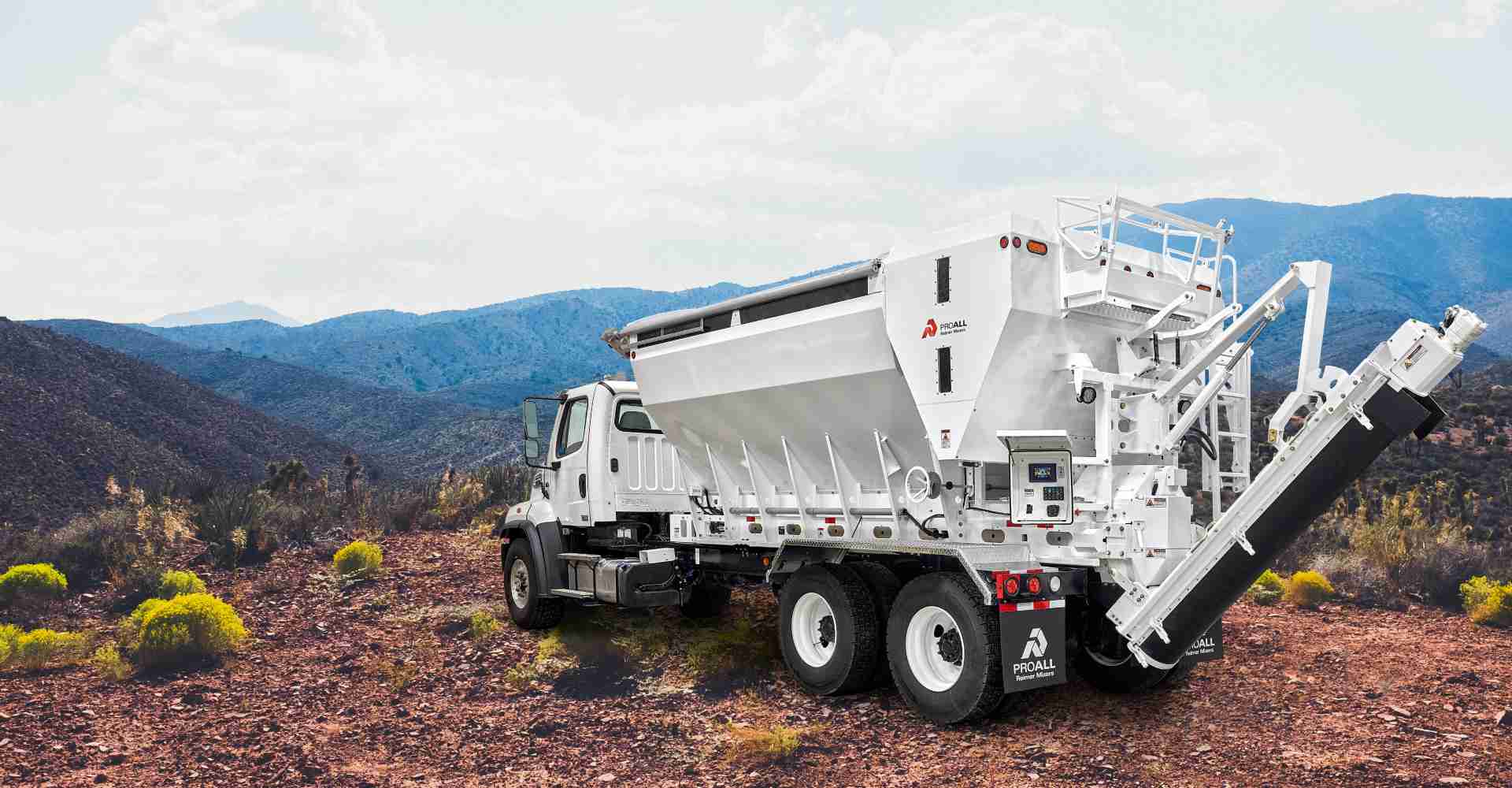
Ready to add gunite pool building to your service lineup? At ProAll, our G95 Gunite Mixer helps you streamline the entire process and finish projects in the most efficient, profitable way possible.